
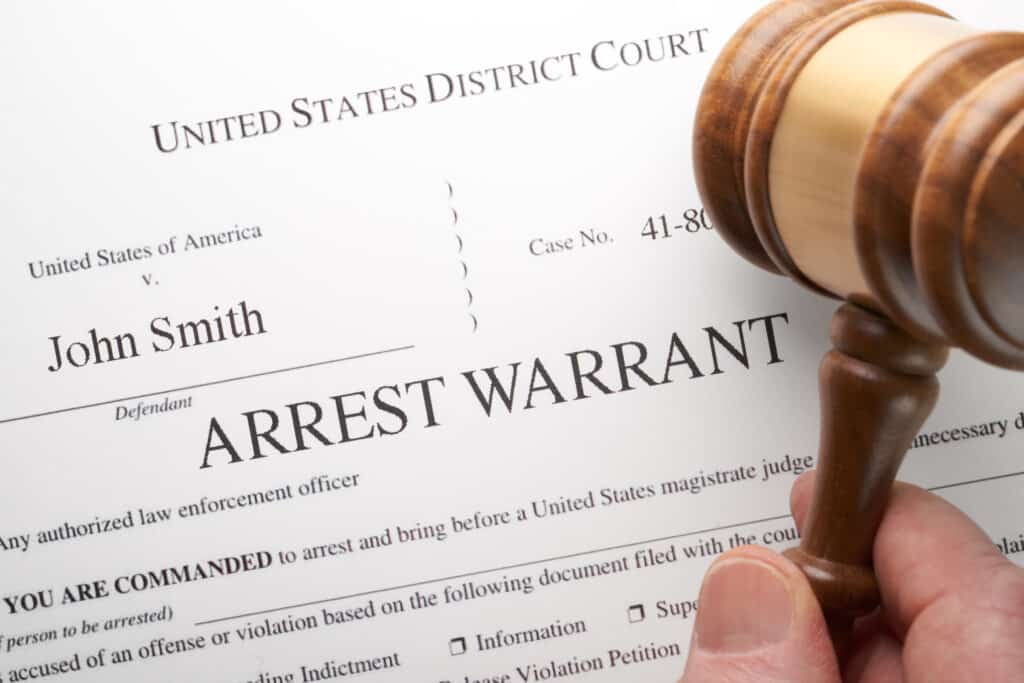
Louisiana Code of Criminal Procedure Article 202 governs the issuance of an arrest warrant — who may issue it and what must support it. Because an arrest warrant authorizes the State to seize your liberty, the requirements behind it are a frequent and fertile area of defense.
What the Statute Says
Art. 202. Warrant of arrest; issuance
A. A warrant of arrest may be issued by any magistrate pursuant to this Paragraph or as provided in Paragraph D of this Article and, except where a summons is issued under Article 209 of this Code, shall be issued when all of the following occur:
(1) The person making the complaint executes an affidavit specifying, to his best knowledge and belief, the nature, date, and place of the offense, and the name and surname of the offender if known, and of the person injured if there be any. An affidavit containing the electronic signature of the applicant shall satisfy the constitutional requirement that the testimony of the applicant be made under oath, provided that such signature is made under penalty of perjury and in compliance with R.S. 9:2603.1(D).
(2) The magistrate has probable cause to believe that an offense was committed and that the person against whom the complaint was made committed it.
B.(1) A justice of the peace shall not have the authority to issue a warrant for the arrest of a peace officer for acts performed while in the course and scope of his official duties.
(2) A justice of the peace shall not issue a warrant for the arrest of an administrator of any public or private elementary, secondary, high school, vocational-technical school, college, university, or licensed child day care center in this state or a teacher in any public or private elementary, secondary, high school, vocational-technical school, college, or university in this state who is acting in the course and scope of his official duties, unless an independent investigation into the allegations has been conducted and the investigator’s findings support the allegations contained in the affidavit required in Subparagraph (A)(1) of this Article.
C. When complaint is made before a magistrate of the commission of an offense in another parish, the magistrate shall also immediately notify the district attorney of the parish in which the offense is alleged to have been committed.
[Excerpt — see the full text at the official source linked below.]
La. Code Crim. Proc. — source: Louisiana State Legislature
Why Article 202 Matters to Your Defense
Article 202 matters because an arrest warrant must rest on probable cause, supported by oath or affirmation. A warrant built on a thin, conclusory, or misleading affidavit is vulnerable to challenge, and so is the arrest carried out under it.
Defects in the warrant process can affect not only the arrest itself but also the admissibility of statements and evidence obtained afterward.
How Our Attorneys Use Article 202
We examine the affidavit supporting the warrant for genuine probable cause, testing whether the facts were current, reliable, and sufficient. Where the showing falls short, we challenge the arrest and seek to suppress what followed.
We also confirm the warrant was issued by a proper magistrate in compliance with the statute. See our Louisiana criminal procedure overview for how warrant defects ripple through a case.
Frequently Asked Questions
Under Article 202, a warrant of arrest may be issued by a magistrate, based on a showing of probable cause supported by oath or affirmation.
A warrant may be invalid if it lacks probable cause, rests on a misleading or conclusory affidavit, or fails to comply with statutory requirements.
Yes. If the warrant was defective, your attorney can challenge the arrest and move to suppress statements and evidence obtained as a result.
Charged in Louisiana? Talk to a Defense Attorney
If your case involves an arrest warrant, the procedural details can shape the entire outcome. The Ambeau Law Firm knows how to hold the State to the rules. Contact us or call (225) 330-7009 for a free, confidential consultation.