
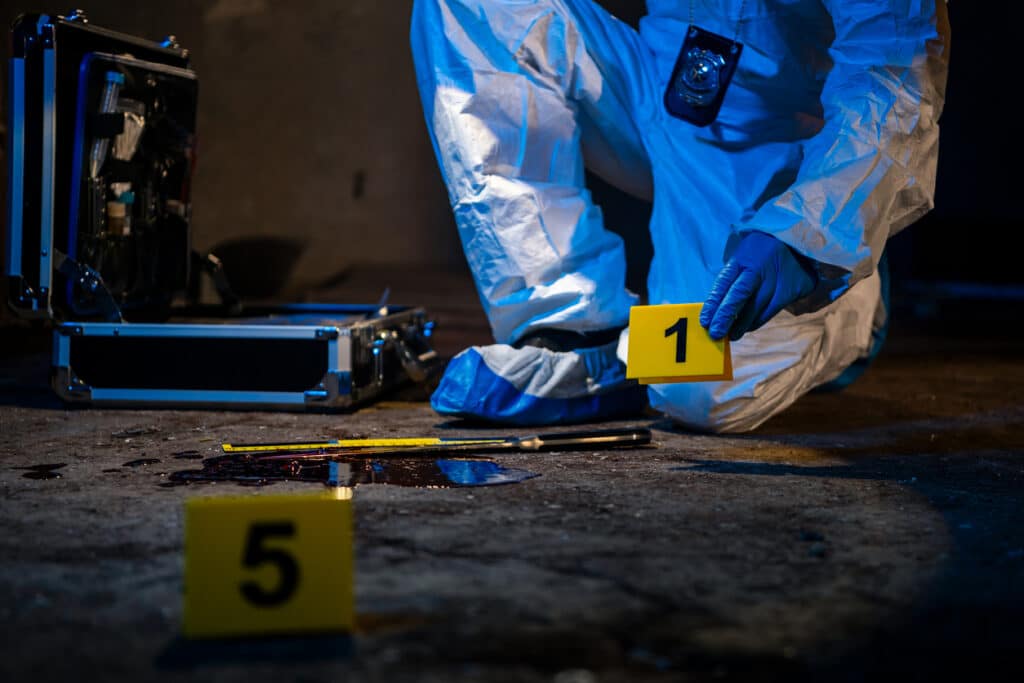
Louisiana Code of Criminal Procedure Article 163.1 governs search warrants for bodily samples — authorizing the collection of DNA, blood, and other biological evidence from a person. Because this evidence is often central to the State’s case, the rules surrounding its collection deserve close attention.
What the Statute Says
Art. 163.1. Search of a person for bodily samples; warrants; execution
A. A judge may issue a search warrant authorizing the search of a person for bodily samples to obtain deoxyribonucleic acid (DNA) or other bodily samples.
B. The warrant may be executed any place the person is found and shall be directed to any peace officer who shall obtain and distribute the bodily samples as directed in the warrant.
C. A warrant authorizing the search of a person for bodily samples remains in effect for one hundred eighty days after its issuance.
D.(1) Any examination or testing of any bodily samples seized pursuant to the provisions of this Article shall be at the direction of the attorney general, the district attorney, or the investigating agency.
(2) Notwithstanding any other provision of law to the contrary, any examination or testing of the bodily samples may be conducted at any time before or during the pendency of any criminal proceeding in which the samples may be used as evidence.
La. Code Crim. Proc. — source: Louisiana State Legislature
Why Article 163.1 Matters to Your Defense
Article 163.1 matters because the seizure of biological material from your body is a significant intrusion that must be properly authorized and executed. Defects in the warrant, or in how the sample was obtained, can undermine the resulting evidence.
DNA and blood evidence carries enormous persuasive weight with juries, which makes challenging its lawful collection all the more important. A flawed collection process can call the whole result into question.
How Our Attorneys Use Article 163.1
We test whether the warrant met the statutory and constitutional requirements, and we scrutinize the collection, handling, and chain of custody of any bodily sample. Our firm’s deep experience in forensic DNA litigation is a real advantage in these cases.
Where the warrant or collection was defective, we move to suppress the sample and any analysis derived from it. See our Louisiana criminal procedure overview for how this fits the larger defense.
Frequently Asked Questions
Yes. Article 163.1 allows a judge to issue a warrant authorizing the search of a person for bodily samples such as DNA or blood, subject to statutory and constitutional requirements.
Yes. Defects in the warrant or in the collection, handling, or chain of custody of the sample can be challenged and may lead to suppression.
DNA and blood evidence is highly persuasive to juries, so ensuring it was lawfully obtained and reliably analyzed is critical to a fair trial.
Charged in Louisiana? Talk to a Defense Attorney
If your case involves a warrant for DNA or other bodily samples, the procedural details can shape the entire outcome. The Ambeau Law Firm knows how to hold the State to the rules. Contact us or call (225) 330-7009 for a free, confidential consultation.