

The Issue
Updated August 2026: this post has been revised to reflect the Supreme Court’s February 25, 2026 decision in Villarreal v. Texas, which was still pending at initial publication.
In Villarreal v. Texas, 607 U.S. 465 (2026), the Supreme Court addressed a fundamental trial procedure question: how far can a trial judge restrict a defendant’s ability to discuss his own testimony with counsel during trial recesses without violating the Sixth Amendment right to effective assistance of counsel? The case challenged a judge’s order barring a defendant from discussing his testimony during an overnight recess, a practice designed to prevent collusion but that may interfere with the defendant’s constitutional right to prepare his defense with counsel. On February 25, 2026, the Court held 7-2 that the restriction did not violate the Sixth Amendment.
Background
When a defendant testifies at trial, trial judges sometimes issue instructions limiting what the defendant can discuss during breaks. The purpose is to prevent the defendant from tailoring future testimony based on cross-examination or coordinating testimony with other witnesses. Courts justify such restrictions as necessary to maintain trial integrity and prevent witness tampering. However, the restrictions may impede the defendant’s ability to consult with counsel about the ongoing trial strategy, emerging questions, or perceived errors in the prosecution’s case.
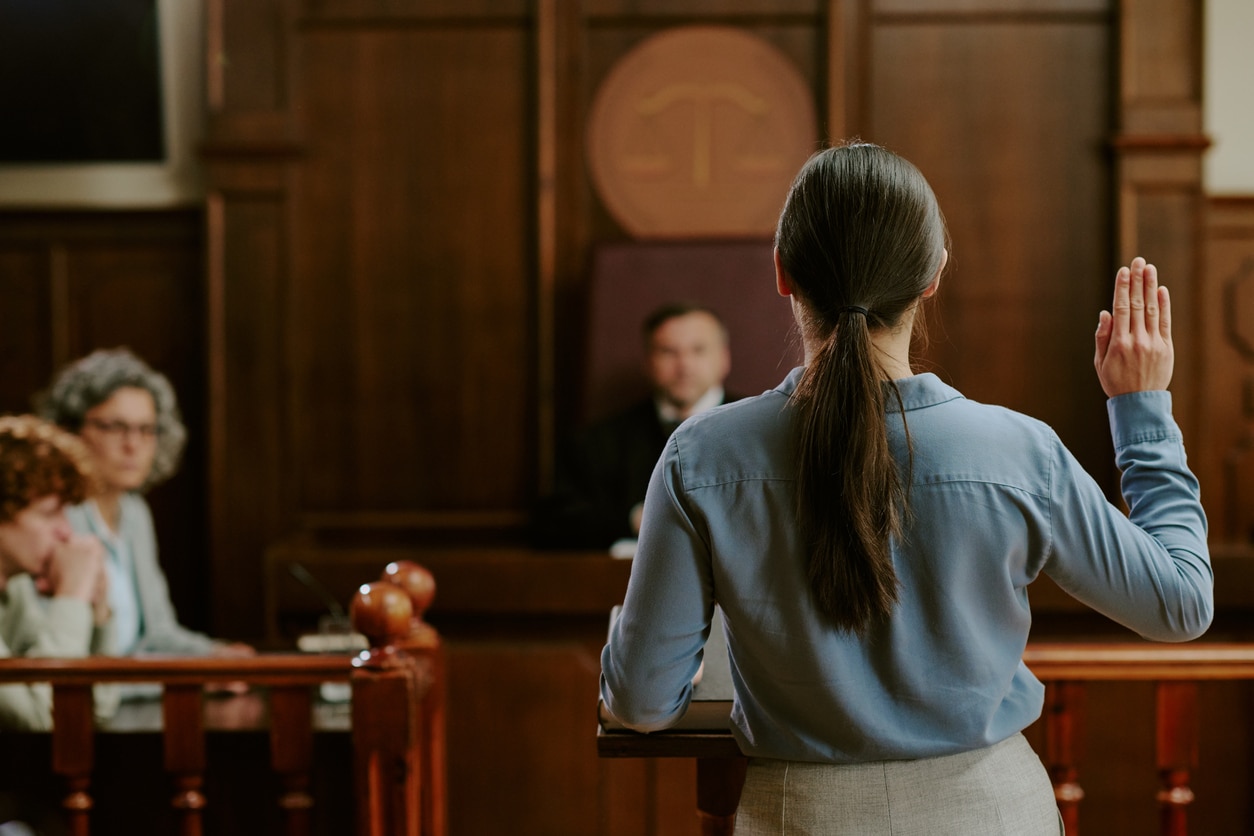
In Villarreal, the trial judge ordered the defendant not to discuss his testimony during an overnight recess while he was in the middle of testifying. The defendant argued this violated his Sixth Amendment right to the assistance of counsel, as it prevented him from fully consulting with his attorney about trial strategy and testimony. The Texas courts upheld the order as a reasonable exercise of judicial authority. The Supreme Court granted certiorari to decide whether such restrictions, imposed during active testimony, are constitutional, and on February 25, 2026 affirmed, 7-2 (Justice Jackson writing for the majority, joined by Chief Justice Roberts and Justices Alito, Sotomayor, Kagan, Kavanaugh, and Barrett; Justices Thomas and Gorsuch concurred only in the judgment). The Court held that a qualified order limiting a testifying defendant’s discussion of the substance of his ongoing testimony specifically, while still permitting consultation with counsel on other topics such as trial strategy and sentencing, does not violate the Sixth Amendment.
Strategic Implications
This case pits two trial interests against each other: the defendant’s constitutional right to counsel and the court’s interest in preventing witness coordination or perjury. A ruling favoring defendants would protect a critical aspect of the Sixth Amendment—the ability to consult counsel freely—and would limit a trial judge’s power to isolate a testifying defendant from legal advice during trial breaks. For anyone facing serious charges, the strength of felony defense often turns on protecting these procedural rights at trial.
A ruling favoring prosecutors and trial judges would permit broader restrictions on defendant-counsel communication, potentially chilling the defendant’s willingness to testify and hampering the defense strategy midstream. The Court must balance the need for trial integrity against the constitutional imperative of effective assistance of counsel. The ruling will affect how trial judges manage recess instructions and how defense counsel navigates the trial of a testifying defendant.
How Does This Apply in Louisiana?
Louisiana trial procedure is governed by La. C.Cr.P. arts. 1–741 (Code of Criminal Procedure). The Louisiana Constitution Article 1, Section 13 guarantees the right to counsel. La. R.P.C. 1.1 requires competence and effective assistance. Trial judges in Louisiana have broad discretion to manage courtroom decorum and witnesses, but that discretion is not unlimited by the Sixth Amendment. These principles run throughout Louisiana criminal procedure.
In Louisiana state court trials, judges regularly manage defendant testimony by instructing the defendant not to leave the courtroom or to limit discussion with spectators. A recess instruction restricting a testifying defendant’s ability to consult with counsel goes further and may trigger Sixth Amendment scrutiny. Because the Court in Villarreal upheld this kind of restriction, Louisiana trial judges retain authority to bar a testifying defendant from discussing the substance of his ongoing testimony with counsel during a recess, so long as the order is narrowly drawn and does not cut off consultation on other subjects entirely. The Sixth Amendment right to counsel is described by the federal judiciary as foundational to a fair trial, and defense counsel should still object on the record any time a restriction sweeps more broadly than Villarreal permits.
Defense strategy should include: (1) objecting on the record to any recess instruction that prevents consultation with counsel; (2) requesting a jury instruction that the defendant’s silence or lack of further questioning does not indicate guilt; (3) exploring whether specific concerns (witness coordination, prior inconsistent statements) justify the restriction on a narrower basis; and (4) documenting the instruction and any prejudicial effect on the defense. Given the stakes—a testifying defendant’s testimony is often central to the defense case—counsel must protect the constitutional right to advise the client throughout the trial. Learn more about our approach to federal criminal defense.
Frequently Asked Questions
Can a judge tell me not to talk to my attorney during trial breaks?
As of the Supreme Court’s February 2026 decision in Villarreal v. Texas, yes: a judge may bar you from discussing the substance of your ongoing testimony with your attorney during a recess, as long as you can still consult counsel on other topics. A restriction that cuts off all communication, not just discussion of your testimony, remains open to challenge.
Why would a judge restrict recess communication?
Trial judges may restrict recess communication to prevent a testifying defendant from being coached or tailoring testimony based on cross-examination, or to prevent a defendant from coordinating testimony with other witnesses. However, these concerns must be balanced against the defendant’s constitutional right to consult counsel.
If the judge restricts my recess communication, what should I do?
Object on the record immediately and state your objection clearly. “Your Honor, I object to any restriction on my ability to consult with my counsel regarding my testimony. This restriction violates my Sixth Amendment right to effective assistance of counsel.” Preserve the issue for appeal.
Does Villarreal affect my right to testify?
Villarreal addresses recess communication, not the right to testify itself. The Court’s ruling means a narrowly-drawn restriction on discussing your ongoing testimony during a recess will not, by itself, violate your right to counsel. Discuss with your attorney in advance how to handle any recess restriction the judge imposes.
What if I waive my right to talk to counsel?
You cannot waive a constitutional right inadvertently. If the judge imposes a blanket restriction without your agreement, it may violate the Sixth Amendment regardless of your willingness to comply. Counsel should protect your rights even if you agree to the restriction.
Conclusion
Villarreal has now defined the boundaries of trial judge authority over defendant-counsel communication during trial: a narrowly-drawn restriction on discussing the substance of ongoing testimony survives Sixth Amendment scrutiny, but broader restrictions remain vulnerable to challenge.