
DWI Defense Lawyer in Louisiana
Written by Jarrett Ambeau, trial attorney, court-qualified forensic DNA expert, and lead counsel at The Ambeau Law Firm.
What is a DWI in Louisiana? Louisiana’s impaired-driving law, La. R.S. 14:98, applies when a driver is impaired by alcohol or drugs, or has a blood alcohol concentration of 0.08 percent or more. It carries criminal penalties and a separate license suspension, and the consequences climb steeply with each prior offense.
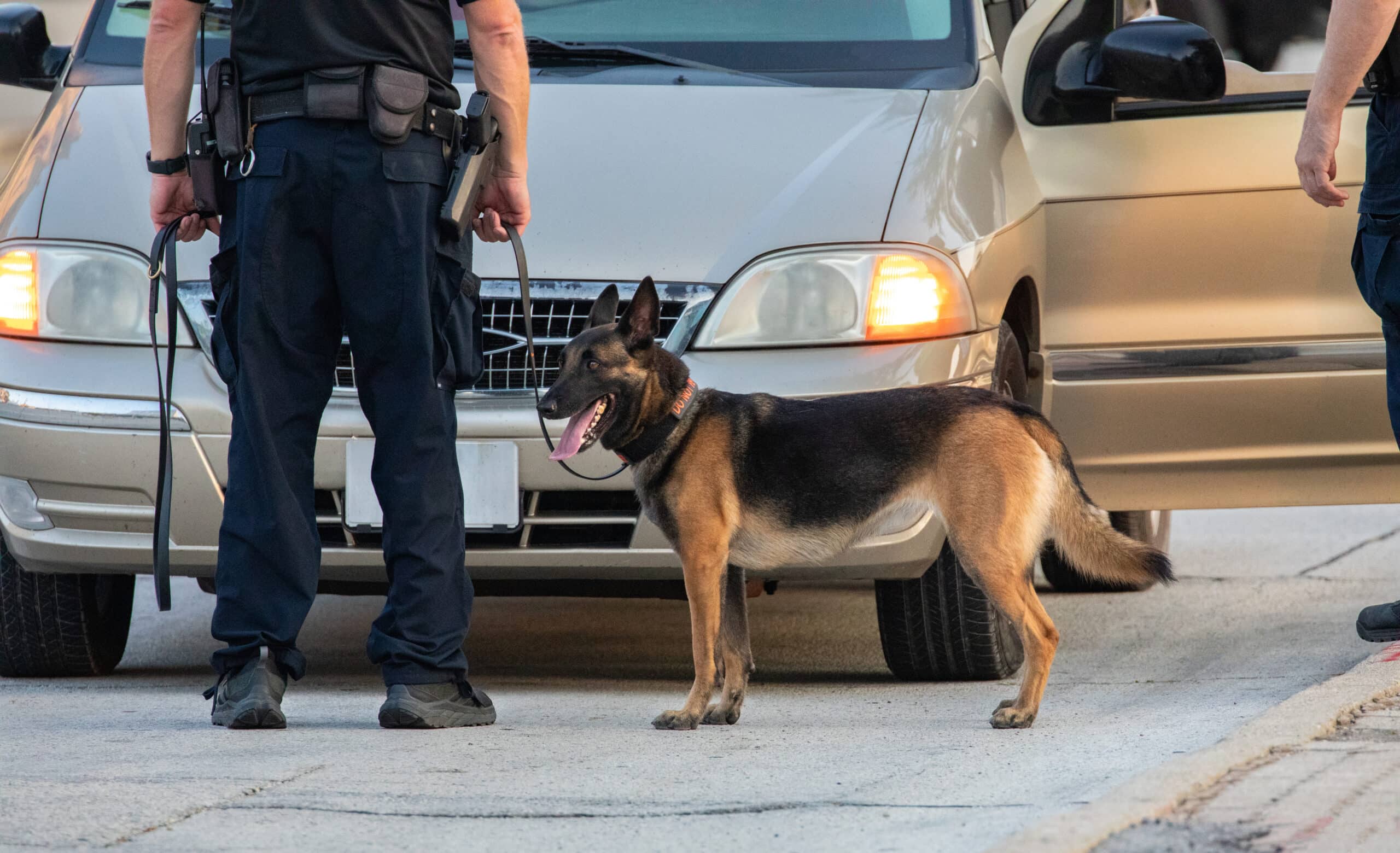
A DWI hits on two fronts at once: the criminal case and a separate fight over your driver’s license, each with its own deadlines. People often focus on the courtroom and lose their license by missing the administrative deadline. These cases also rest heavily on testing, from the breath machine to the blood draw, and that testing can be wrong.
I am Jarrett Ambeau. I have tried more than sixty felony jury trials to verdict, and I am a court-qualified forensic expert. DWI cases turn on the science of chemical testing, and that is exactly where I concentrate the defense.
Quick answers
- What it is: operating a vehicle while impaired by alcohol or drugs, or at a BAC of 0.08 percent or more (La. R.S. 14:98).
- The penalty: misdemeanor for a first or second offense; felony for a third; ten to thirty years for a fourth.
- The key issue: whether the stop, the testing, and the impairment evidence hold up.
- What to do first: act fast on the license deadline and call a lawyer before making any statement.
How a DWI is charged in Louisiana
The state can prove operating while impaired in more than one way: by showing impairment from alcohol, by a blood alcohol concentration of 0.08 percent or more, or by impairment from drugs, including some prescriptions. It does not require actual bad driving, only operation or physical control of a vehicle while impaired. Prior DWIs, and even certain vehicular offenses, count toward escalating the charge to a second, third, or fourth offense.
Elements the State must prove
To convict, the state must prove beyond a reasonable doubt:
- Operation or control. That the defendant was operating or in actual physical control of a vehicle.
- Impairment or a qualifying BAC. That the defendant was impaired, or at 0.08 percent or more.
- A lawful basis for the evidence. That the stop, arrest, and testing were lawful.
- Prior convictions, if enhanced. Valid prior offenses to raise the charge to second, third, or fourth.
What happens after a DWI arrest in Louisiana?
Say a man named Joe is arrested at a traffic stop. He is booked and usually released on bond. Right away, a clock starts on the administrative license suspension, with a short window to request a hearing. The criminal case then moves through arraignment, the motions phase, and possibly trial. In the motions phase we challenge the stop, the field sobriety tests, and the chemical testing, which is where many DWI cases are won or narrowed.
What are the defenses to a DWI?
The defenses that come up most often include:
- Unlawful stop. That police lacked a valid reason to stop the vehicle, which can suppress everything after.
- Faulty chemical testing. Challenging the breath machine’s calibration and maintenance, or the blood draw and handling.
- Improper field sobriety tests. That the tests were administered or scored incorrectly.
- No actual impairment. That the driver was not impaired and the evidence does not prove otherwise.
- Invalid prior convictions. Attacking prior offenses used to enhance the charge.
How we defend a DWI charge
Because I am a court-qualified forensic expert, I scrutinize the chemical testing that most DWI cases depend on. Breath and blood results are frequently treated as unquestionable when they are not, from calibration records to the way a sample was collected and stored. We also examine the stop and the officer’s observations closely. You can read more on our forensic science page.
We fight the criminal case and the license suspension together, because both matter to your life. Where the facts allow, we push for reduction or dismissal. Early, aggressive representation makes a real difference. It is what we do here at The Ambeau Law Firm.
Frequently asked questions
What is a DWI in Louisiana?
Louisiana’s impaired-driving law is La. R.S. 14:98, now titled operating a vehicle while impaired. It applies when a driver is impaired by alcohol or drugs, or has a blood alcohol concentration of 0.08 percent or more. It covers cars, and also aircraft, watercraft, and other conveyances. A valid driver’s license is not required for the offense, and lacking one is not a defense.
What happens to my driver’s license after a DWI arrest in Louisiana?
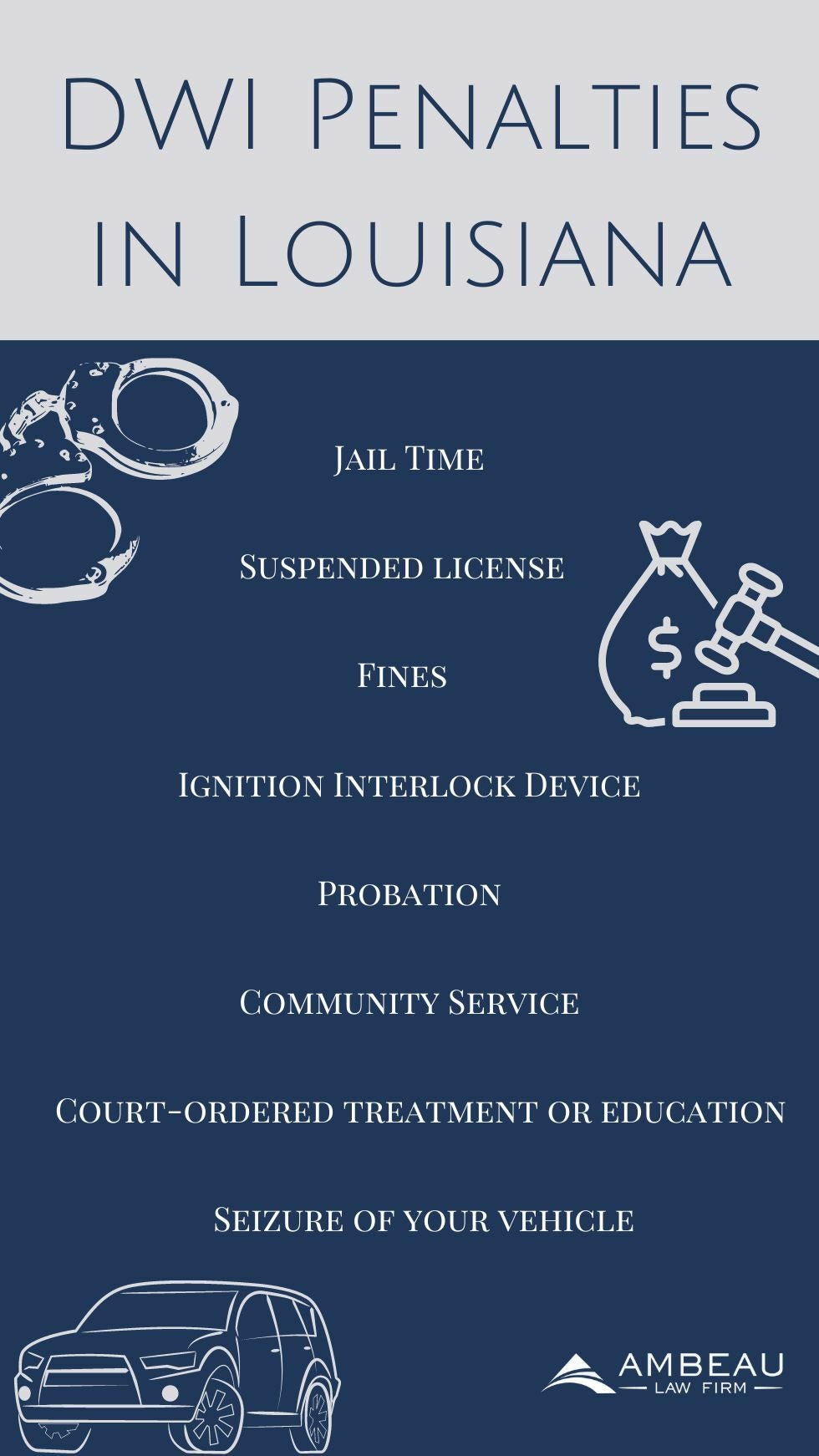
A DWI arrest triggers a separate administrative process with the Office of Motor Vehicles that can suspend your license quickly, independent of the criminal case. There are short deadlines to request a hearing, so this needs attention right away. A higher blood alcohol level, or a refusal, can lengthen the suspension considerably. Acting fast is often the difference in keeping your ability to drive.
Is a first-offense DWI a felony in Louisiana?
No. A first offense under La. R.S. 14:98.1 is a misdemeanor, punishable by a fine of three hundred to one thousand dollars and ten days to six months, usually with probation conditions. A second offense is also a misdemeanor. But a third offense under La. R.S. 14:98.3 is a felony, and a fourth or subsequent offense under La. R.S. 14:98.4 carries ten to thirty years.
Can a DWI charge be beaten in Louisiana?
Frequently these cases have real weaknesses. The traffic stop must be lawful, the field and chemical testing must be properly administered, and the breath machine must be maintained and calibrated. Each of those can be challenged. Because I have deep experience with forensic testing, I know where the science tends to break down, and that is often where a DWI case turns.
Talk to a Louisiana DWI defense lawyer
A few quick questions help us understand your situation: Has an arrest already happened? Was a breath or blood test taken, or refused? Is this a first offense or a repeat charge? If you are facing a DWI, do not wait, license deadlines are short. Check Jarrett’s availability for your case or call 225-330-7009.
Louisiana statute reference
DWI is charged under La. R.S. 14:98, with penalties graded by prior offenses in La. R.S. 14:98.1 through 98.4. Statutes change, so verify the current text at the Louisiana State Legislature. Operating a vehicle while impaired applies when the operator is impaired by alcohol or drugs or has a blood alcohol concentration of 0.08 percent or more. A first offense carries a fine of three hundred to one thousand dollars and ten days to six months, a third offense is a felony, and a fourth or subsequent offense carries ten to thirty years.
Source: La. R.S. 14:98 through 98.4, as amended through Acts 2025, No. 194.